SICSS
SCHOOL OF INTEGRATED
CLIMATE AND EARTH
SYSTEM SCIENCES
CLIMATE AND EARTH
SYSTEM SCIENCES
Photo: UHH/Denstorf
5 June 2026

Photo: UHH/Hachfeld
From 3 to 5 June, doctoral researchers from the School of Integrated Climate and Earth System Sciences (SICSS) gathered for this year's Doctoral Retreat at the Zündholzfabrik in Lauenburg (Elbe). Over the course of three days, the focus was on open, cross-disciplinary exchange—creating space to explore those concepts, methods, and terms from other research disciplines that often remain unclear in everyday research.
The evenings were filled with informal conversation at the bonfire or with billiard and other games, contributing to what makes the SICSS Doctoral Retreat special. In the often tightly scheduled routine of a doctorate, there is rarely enough time to connect with your peers—here, that opportunity was deliberately created. Beyond personal exchange, academic perspectives were discussed just as openly: "Why do you approach it this way? I've never quite understood that." These moments of curiosity and dialogue are at the heart of the retreat experience—and they set the tone for the more structured exchanges that followed.
A particular highlight once again were the talks given by doctoral researchers in their final year. After jointly defining criteria for excellent scientific presentations, participants voted the contributions of Selina Undeutsch, Kai Bellinghausen, and Jesús Renzullo Narváez as the three strongest. Selina Undeutsch examines how spatial heterogeneity and seasonality shape methane fluxes in a periglacial tundra – a contribution to understanding greenhouse gas sources in the Arctic. Kai Bellinghausen explores coherent patterns of Northern Hemisphere wind extremes and the large-scale atmospheric drivers behind them. And Jesús Renzullo Narváez uses panel data from 2005 to 2018 to analyse the global implications of food shocks for conflict – bridging climate and social research.
Beyond the lecture hall, Lars Kutzbach led the group on a natural history walk along the Elbe – tracing the region's geology, glacial history, and the flora and fauna of the riverbanks right on site. A rare chance to step outside and read the landscape directly.
The retreat also saw the election of the new doctoral representatives: Christiane Lawrenz, Lars Feuerlein, and Juan Andrés Fuenzalida Alarcón. For the following year, the three will represent the interests of all SICSS doctoral members within ESRAH, CLICCS, and SICSS. They will be members of the Early Career Committee (ECC), organise social activities, and help shape the future of the graduate school.
Participants particularly valued the networking across cohorts and disciplines, as well as the sessions on uncertainty and decision-making in the doctoral process. Above all, the doctoral researchers left with a strong sense of community and the reassurance that they are not alone—more succinctly expressed as "motivation, new friends, and a larger network."
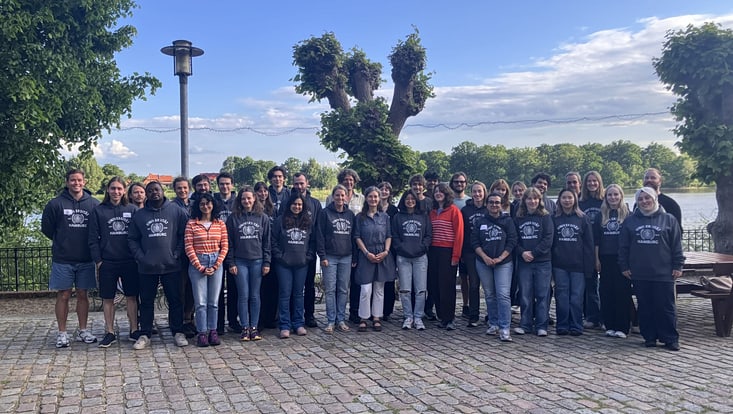
Photo: UHH/Hachfeld
Group photo
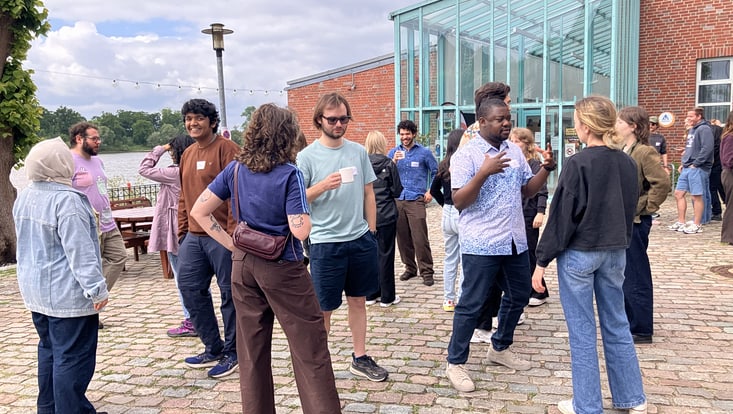
Photo: UHH/Hachfeld
Getting to know each other
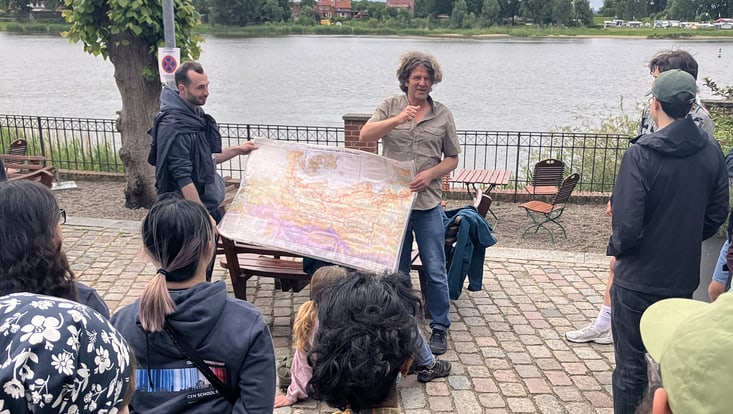
Photo: UHH/Hachfeld
Natural History Walk along the Elbe river with Lars Kutzbach
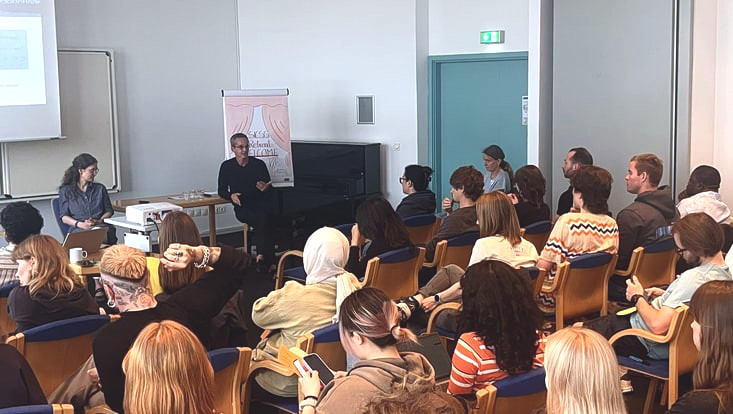
Photo: UHH/Hachfeld
Welcome to SICSS Doctoral Retreat
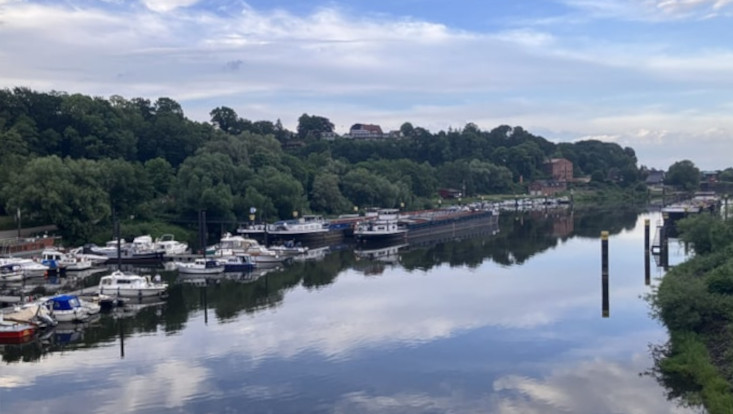
Photo: UHH/Hachfeld
Lauenburg (Elbe)
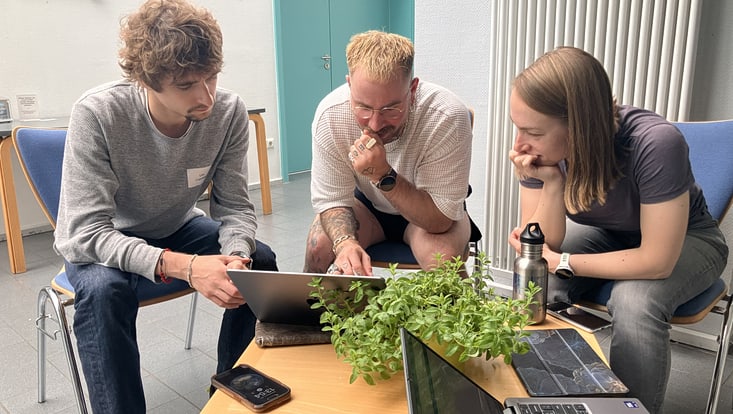
Photo: UHH/Hachfeld
Working on projects in smaller groups
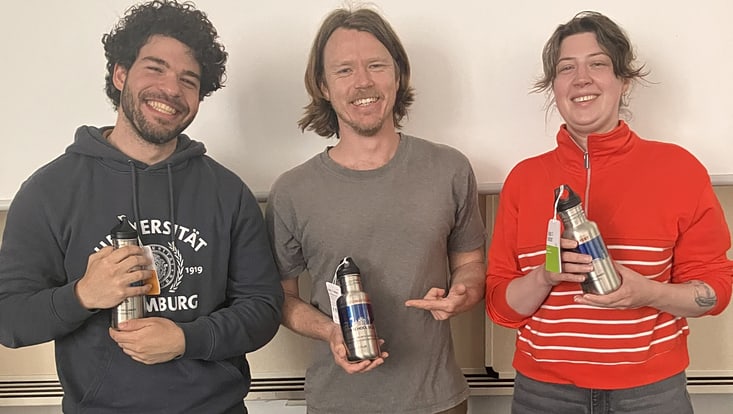
Photo: UHH/Hachfeld
Best scientific presentations: Jesús Renzullo Narváez, Kai Bellinghausen and Selina Undeutsch
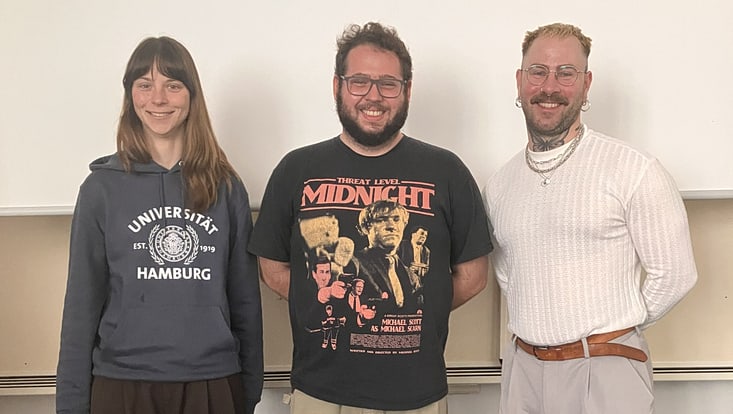
Photo: UHH/Hachfeld
New Doctoral Representatives: Christiane Lawrenz, Juan Andrés Fuenzalida Alarcón and Lars Feuerlein